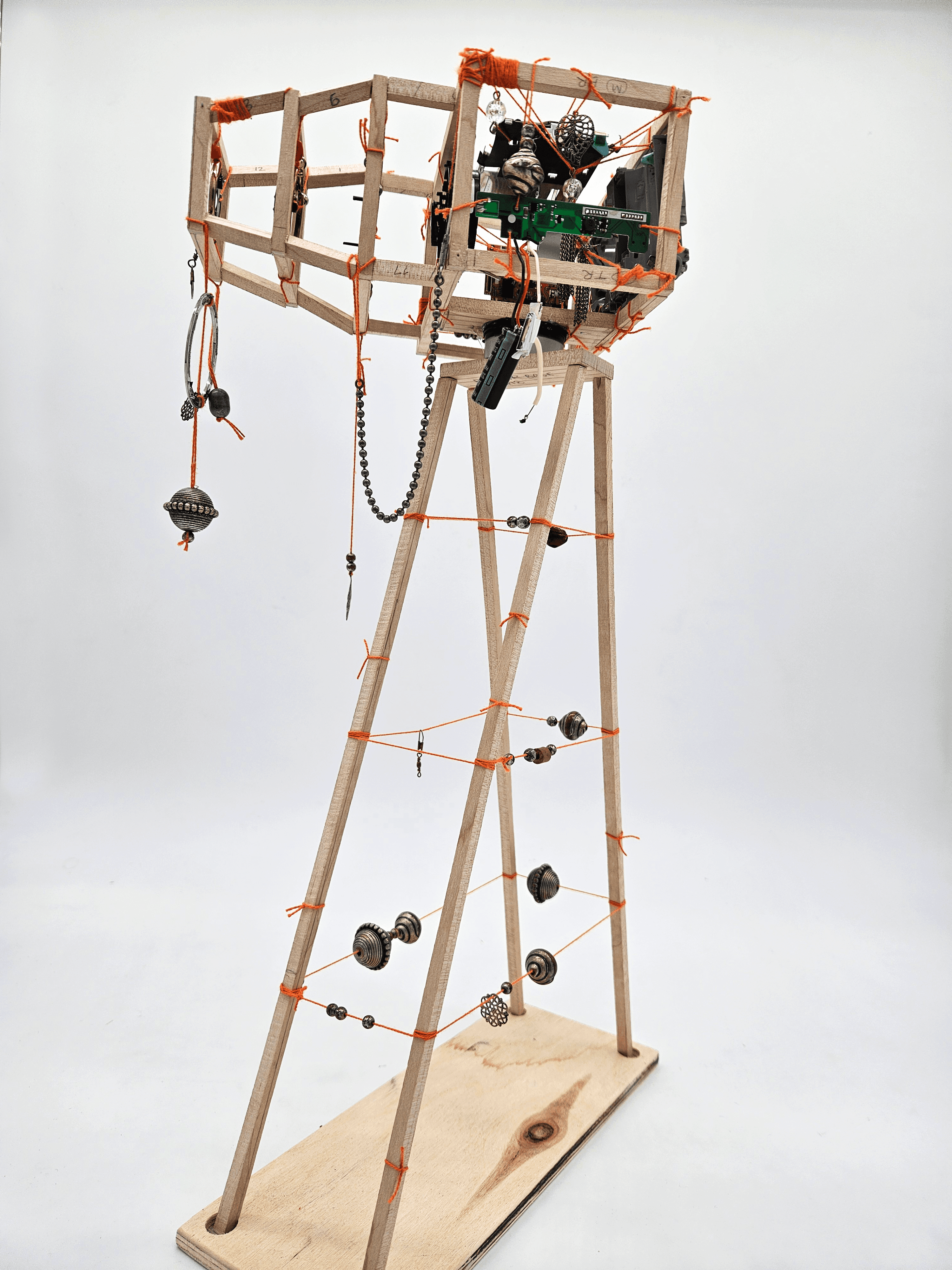
system of movement
archived may 11, 2026
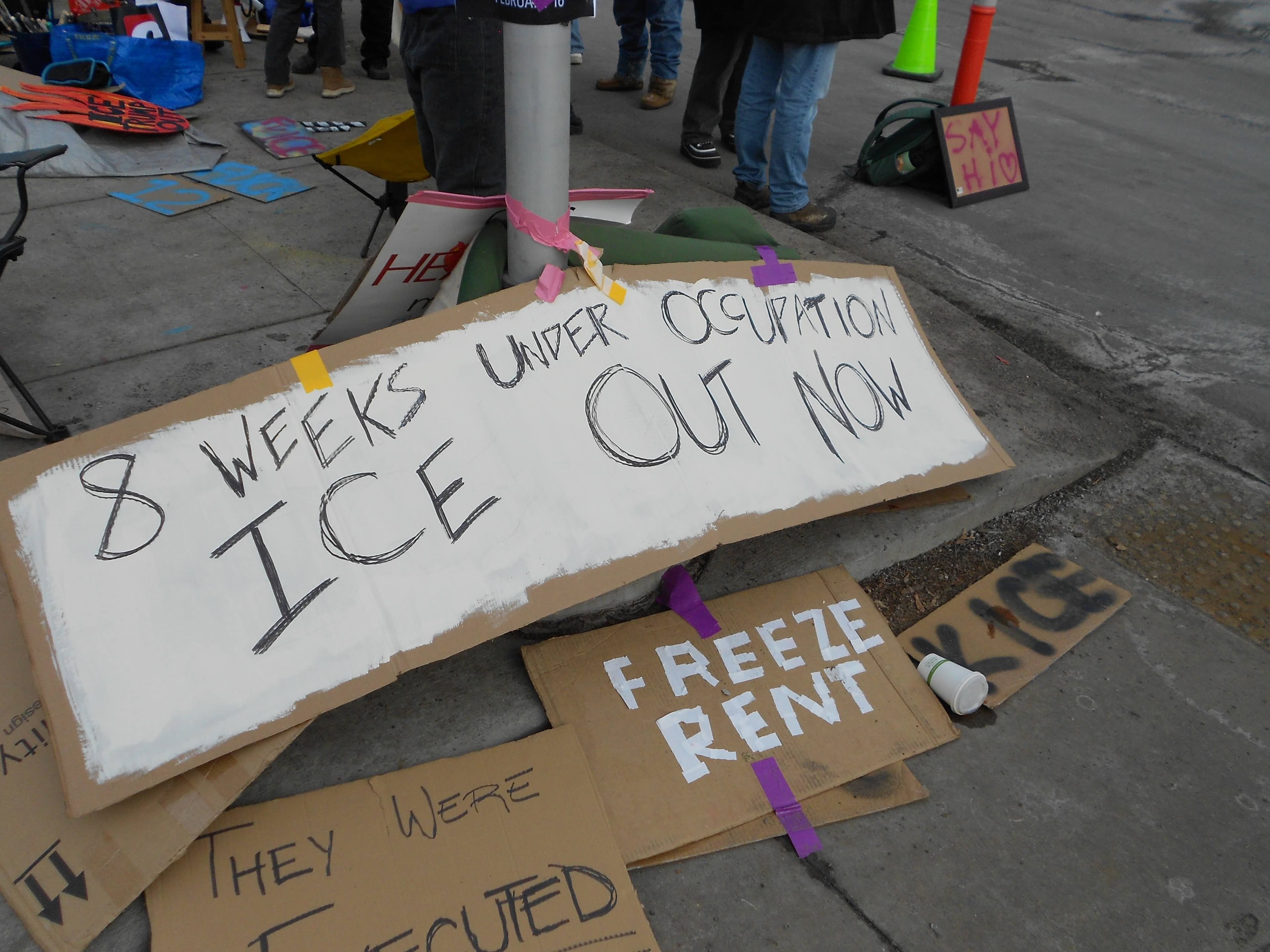
click to see more photos, full sign archive available here
[04/01/2026] Where am I, here, now? The past few months have been very intense, or so I’ve been texting friends and family out of state. It’s something I’ve said a lot, but something I haven’t quite confronted. Staring out the window of my attic bedroom over our backyard driveway, and the cherry tree that hangs just so over the city skyline of Minneapolis, I closed my eyes and really listened. Through each corner of my consciousness rang a siren — a firetruck, a police car, a tree limb falling from up high, a squirrel ran over by a car — ICE agents kidnapping and murdering my neighbors. As ICE agents began taking their flights out of MSP, back to the places that they wanted to call home, to the people they called home, the visibility of this omnipresent violence diminished. Though remained in every corner a siren, every corner deeply tragic, deeply wrong. Landlords took advantage of this violence to perpetuate their wealth, police self replicated in ideology and numbers, the Minneapolis mayor clung to this violence as he is this violence. The months have been intense, but so is / was / will be every month, every corner, deeply tragic.
On Blaisdell and 28th, just a couple weeks ago (or was it days? minutes? Every time, deeply tragic), a 16 year-old neighbor was abducted. My friend and I were on patrol, and ran there as fast as we could. There, we saw hundreds of neighbors whistling, shouting, pointing, crying, washing eyes, driving, biking. ICE agents had taken a neighbor, and on their tortuous way out, they left behind silver canisters of tear gas through the crowd, billowing yellow-green that replaced the air. My friend and I ran towards clearer air, stepping on the window of a shattered car, past broken phones and blaring dispatch in our ears. I’m coming up on it now, just a block away. I look up at the world around me, the world that, apparently, held / holds this violence, the intersection of roads that held / holds all those people, all those noises. It is / was quiet now / then. ('Walk sign to cross : Blaisdell.')
The violence does not start with ICE on these streets and it will not end here. Patrolling forced me out of the pleasantly deafening hum of my whiteness to understand these sirens differently. I saw and heard the way they moved through the city, through the people — West on Lake, North on Harriet at 28th, under the overpass and through to Phillips. The streets, as I recite them step by step, pushing them in order into my brain ( Harriet, Pleasant, Pillsbury, Blaisdell, Nicollet, 1st, Stevens, 2nd … ), define the mode of physical movement through this neighborhood, the modes within which violence travels from person to person, home to home, streets that abstract the very violence necessary for it a grid to exist at all ( Portland, Oakland, Park, Columbus, Chicago, uhh.. Eliot, 10th, 11th, ), stripping the city of visible indigeneity. These are the streets that welcomed ICE agents with open arms, the roads that sent violence as quicksilver across Whittier in moments.
something taped to my wall
archived april 1, 2026
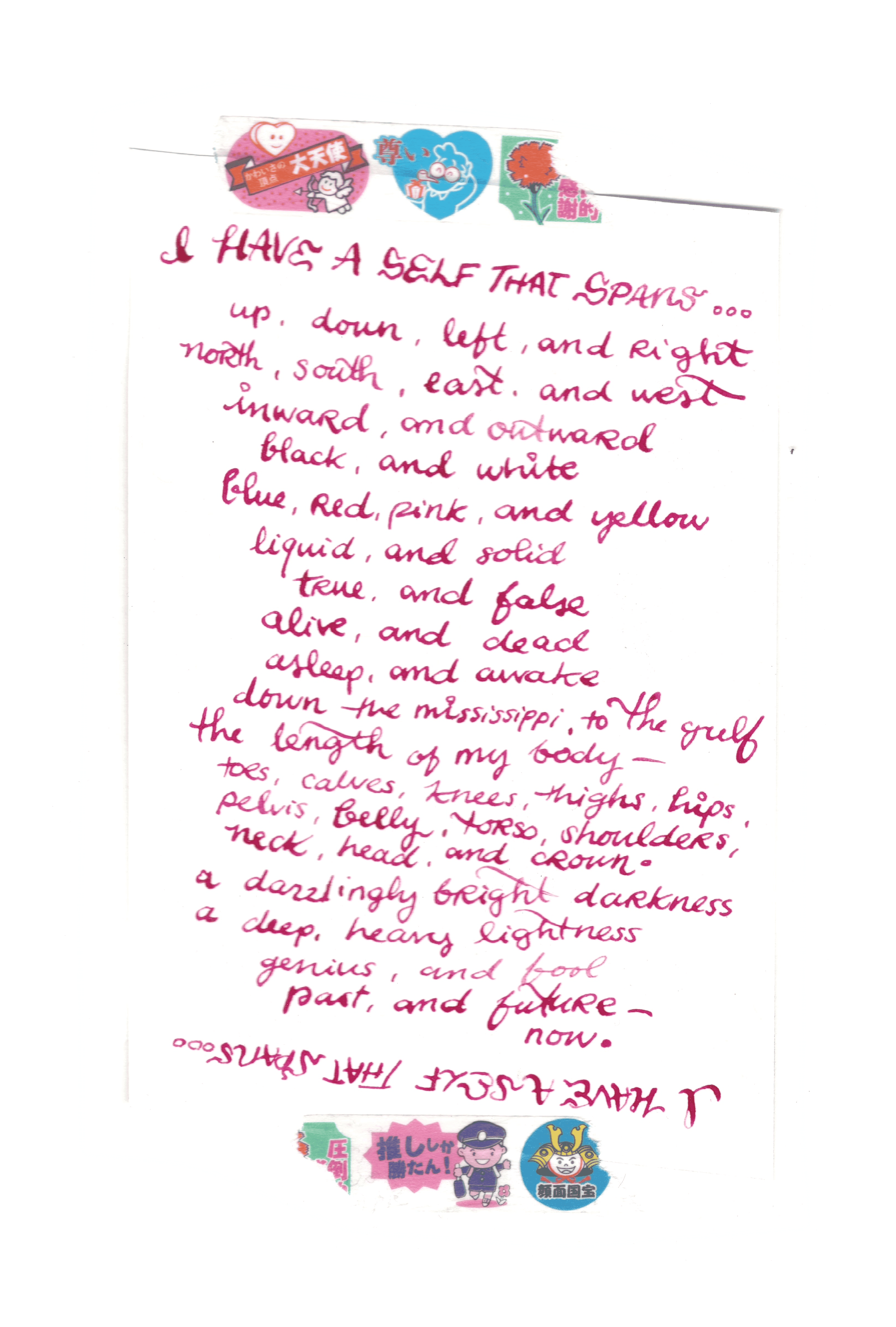
magic 8
archived april 1, 2026
anthropocene consequences
archived april 1, 2026
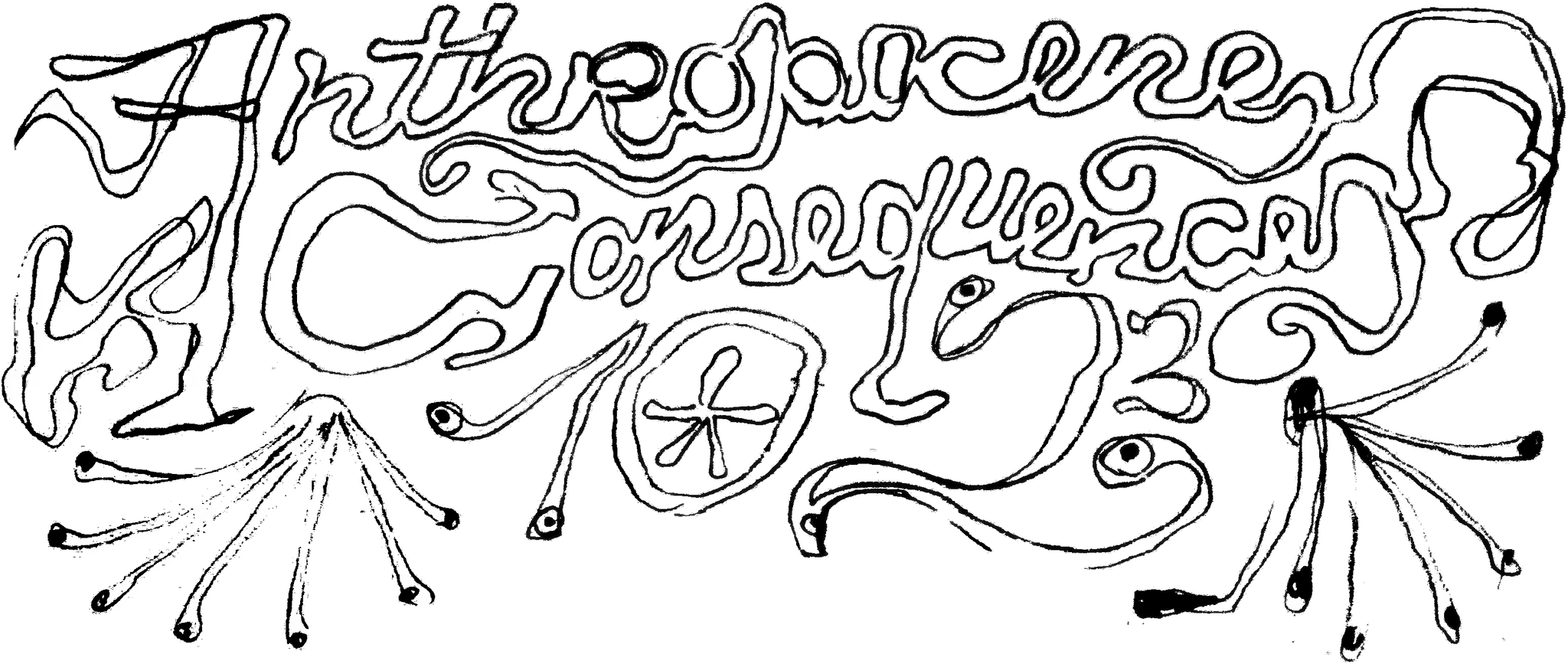
[10/31/2025] During the third week of October, I was in Chicago for the Anthropocene Consequences conference, where researchers, artists, and academics from around the world gathered to discuss what it means to move forward culturally in the Anthropocene.
What does a river look like as a political subject?
What would it look like to start paying whales for their ecological service to the planet?
Is environmental stewardship a civic duty?
What makes a visible river? What makes it invisible?
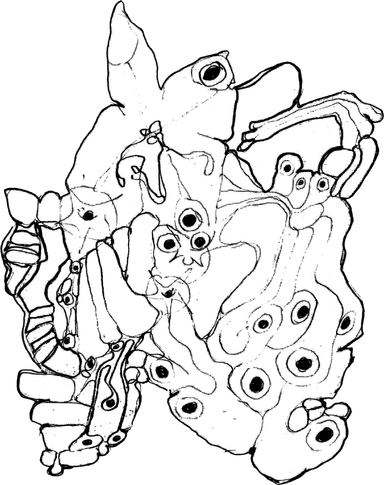
A HUMAN
↙
Like everyone, I find it impossible to think about the current state of the climate. It's clear to me, in the worst way, that a reciprocal relationship reliant on trust and compassion with the humans and non-humans around us, the critical relationship to moving forward through the Anthropocene, is incongruent with current political systems. The cultural shift that must occur to accomodate this colonially-unprecedented relationship to nature is immense in magnitude, and almost requires a completely refreshed understanding of what it means to be a human, and what it means to be a political subject. I have found myself feeling more human towards trees and water.
in my garden
archived april 1, 2026

photobooth
archived march 12, 2026
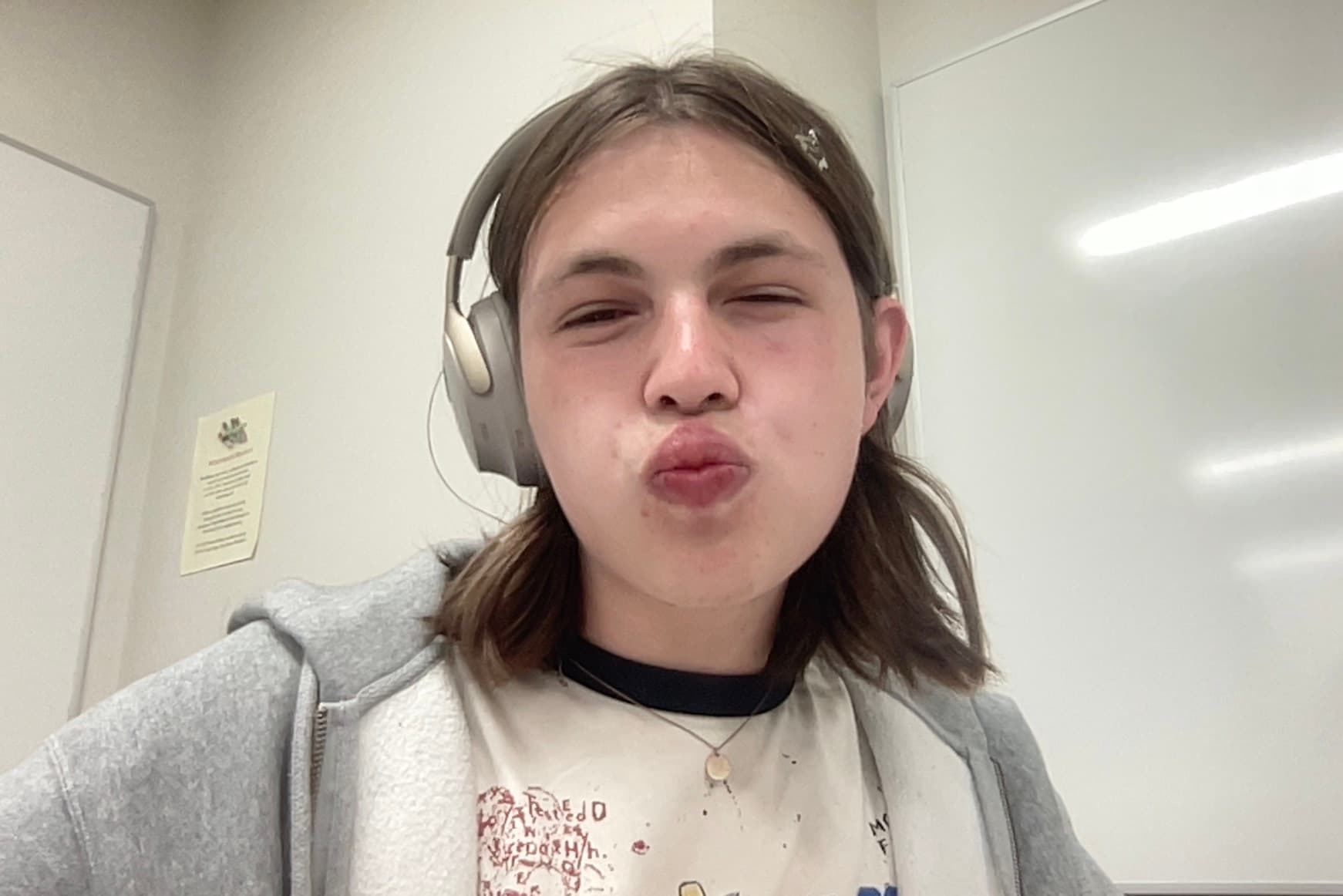
click to see more photos
a sculpture
archived august 8, 2025
click to see more pictures ,